Where brown recluse spiders hide in the house
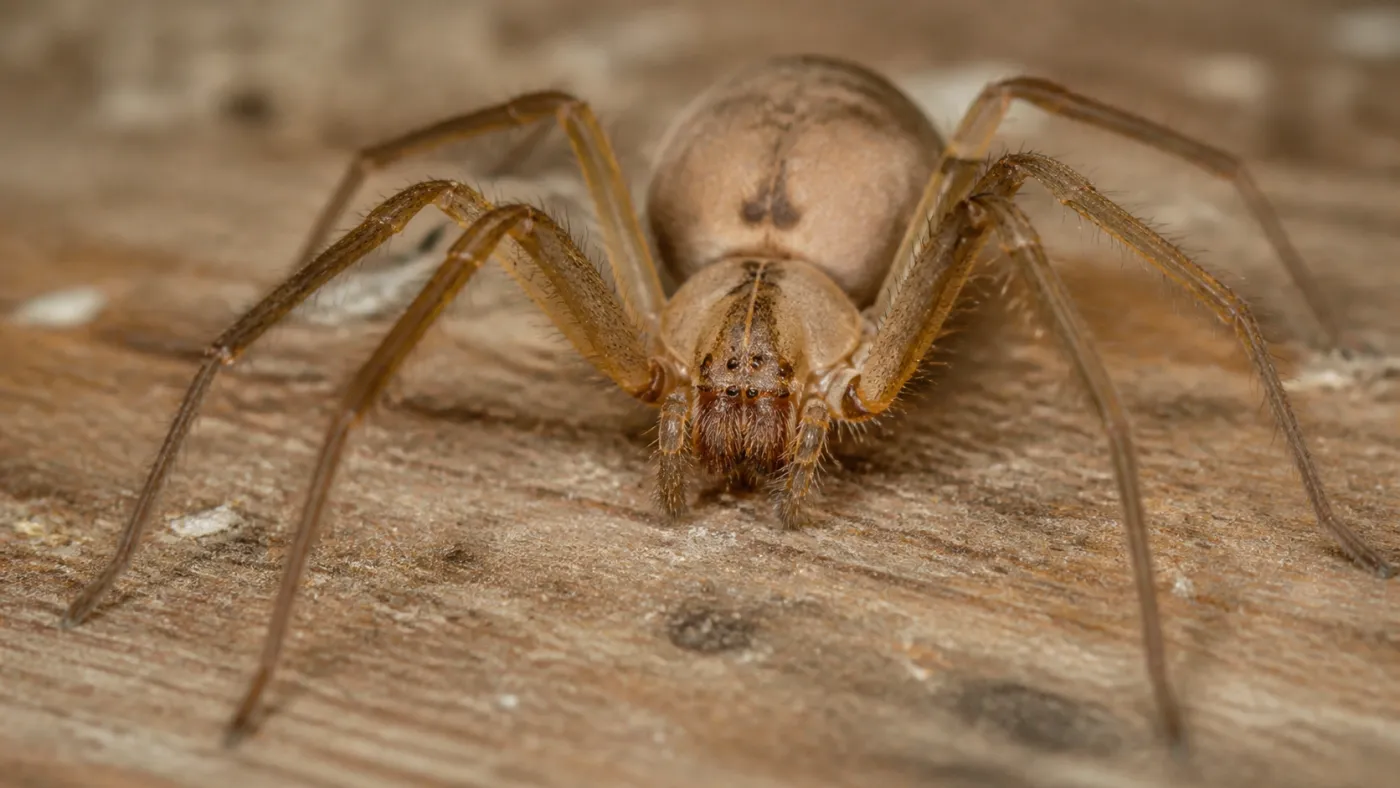
Brown recluse spiders hide wherever your house is dark, dry and left alone: little-used drawers, closets, attics, basements, and the gap behind baseboards and furniture, which is almost word for word how the Missouri Department of Conservation field guide lists it. Notice what is not on that list. Dirt. A spotless Springfield home with a full basement and a closet of off-season clothes is prime real estate. The good news is that "left alone" is the spider's whole strategy, and once you know the spots, you can start taking them away.
On this page
Why a brown recluse picks the spots it picks
A brown recluse picks hiding spots by one rule: nobody touches them for weeks. It does not spin a web to catch dinner. The Missouri Department of Conservation describes it as a nomadic hunter that roams for prey and can live for several years, so by day it needs a tight, quiet crevice and by night it walks the baseboards looking for insects. That is why you find them in the storage room and not the kitchen. There is one quirk worth knowing. A recluse cannot climb smooth surfaces, which is why the one you meet is so often stranded in the bathtub at 6 a.m., looking as annoyed as you are.
What happens when you let brown recluses settle in
Letting brown recluses settle in means sharing your storage with a spider that does not leave on its own. Picture late October in Springfield. You pull the winter coat you have not touched since March off the closet floor, slide an arm in, and something pressed into the sleeve lining gets squeezed against your skin. That is exactly how most bites happen, according to University of Kentucky extension entomologist Michael Potter: body pressure, a spider trapped against bare skin, often while putting on clothing it chose as its daytime retreat. Same story with the box of Christmas decorations you carry up from the basement, or the work gloves in the garage. Most of those bites leave a minor mark. In the severe cases the Missouri Department of Conservation describes, the bite becomes an ulcerated wound that can last for months. And meanwhile nothing clears them out for you. Potter notes they ride out winters in unheated basements and summers in hot attics, going many months without food or water. Waiting does not starve them. It just gives them another season of egg sacs.
Brown recluse hiding spots, room by room
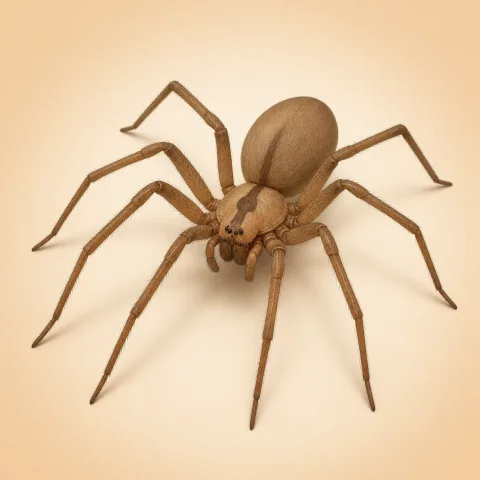
Brown recluse hiding spots cluster in the rooms you visit least, and in any Ozarks house those are the basement, the attic, the garage and the back of the closet. University of Kentucky Extension adds a few that surprise people: above suspended ceilings, behind woodwork, and inside ducts and registers. Use this as your checklist.
| Room | Exact hiding spots | What to check |
|---|---|---|
| Closets | Shoes on the floor, off-season coats, bags and boxes on the back shelf | Shake out anything that sat for a month before wearing it |
| Bedrooms | Under the bed, behind the headboard, bed skirts touching the floor, dresser drawers nobody opens | Pull the bed off the wall, look along the wall-floor line with a flashlight |
| Basement | Cardboard boxes, the corner behind the water heater, sill plates, stacked paper | Glue boards at wall edges, gloves on when moving boxes |
| Attic | Insulation edges, stored holiday bins, around the access hatch | Glue boards near the hatch, sealed plastic totes only |
| Garage and shed | Work gloves, boots, firewood, folded tarps, the gap under shelving | Knock out gloves and boots, keep firewood outside |
| Living areas | Behind baseboards, under furniture, heat registers, suspended ceilings | Look for small irregular webbing and cast skins in corners |
How to check the hiding spots yourself, and shrink them
Checking for brown recluses yourself is cheap and genuinely useful, and you can do most of it this weekend. Start with the tools that work:
- Lay flat glue boards in corners and along wall-floor junctures, especially behind furniture, which is where University of Kentucky Extension recommends placing them. Check weekly and write the counts down.
- Break the bridge to the bed. Move the bed a few inches from the wall and take off the bed skirt, so a wandering spider has no way up.
- Get fabric off the floor. Shoes, laundry and towels go in a hamper or on a hook, and anything that sat out gets shaken before it touches skin.
- Retire the cardboard. A trap-design study in the Journal of Insect Science found brown recluses favor cardboard, so the moving boxes become lidded plastic totes.
- Vacuum, then seal. Vacuum webbing and egg sacs from corners, then caulk baseboard gaps and fit a sweep on the garage entry door.
If what lands on the boards is big, striped and fast, read brown recluse vs wolf spider before you panic. For the full removal sequence, our guide on how to get rid of brown recluse spiders covers treatment and what wastes money.

When DIY is not enough for brown recluses
Brown recluse DIY stops being enough when the numbers or the locations tell you the spiders live inside the structure, not just in your boxes. These are the signs:
- Glue boards keep catching recluses a month or more after you decluttered and sealed.
- You are finding them in bedrooms, bathrooms or living areas, not only the basement and garage.
- You see several sizes at once, or egg sacs, which means they are breeding in the house.
- The hiding spots are ones you cannot reach: wall voids, attic insulation, ducts, a crawl space.
- Someone in the home has already been bitten, or a baby or older relative sleeps near the activity.
One or two of those sound familiar? Then the sensible next step is a professional look at the places you cannot get to. Call (855) 629-1061 and we connect you with a licensed local provider who handles brown recluse control in Springfield and nearby towns like Nixa, and you get a price on the call with no obligation.
Professional recluse work means inspecting harborage and treating cracks and voids directly, and as a typical market range, not a quote, an initial treatment in the Springfield area often runs roughly $150 to $400. Same-day and 24/7 emergency services are subject to provider participation, location, technician availability, and demand. Availability is not guaranteed and may vary by market and appointment capacity. If a bite is why you are here, go to what to do after a brown recluse bite first.
Keep brown recluses in proportion
Brown recluses are common in Missouri houses and serious bites are not. University of Missouri Extension cites a study that found the spider in about 70 percent of the Missouri homes sampled, and a Kansas home described in the Journal of Medical Entomology held 2,055 of them without a single bite. The MDC puts it plainly: a brown recluse cannot easily bite you unless it is pressed against your skin. Shake out the coat. Pull the bed off the wall. Put the boards down. That handles most homes, and the rest is a phone call. More local reading lives in our Springfield pest control guides.
Brown recluse hiding spots FAQ
Do brown recluse spiders hide in beds?
Brown recluses do not live in mattresses, but they do end up in beds by climbing up anything that touches the floor, like a bed skirt, a blanket hanging down, or a headboard pushed against the wall. University of Kentucky extension entomologist Michael Potter recommends pulling beds away from walls and removing bed skirts so the bed has no bridge to the floor.
Where do brown recluses go in the winter?
Brown recluses stay put in winter, tucked into the same undisturbed spots they use all year: basements, attics, wall voids and stored boxes. University of Kentucky Extension notes the brown recluse can survive winters in unheated basements and summer heat in attics, and can go many months without food or water, so a cold garage does not clear them out.
Can a brown recluse climb walls or get out of a bathtub?
A brown recluse climbs rough surfaces like wood, drywall and cardboard easily, but cannot climb smooth surfaces. The Missouri Department of Conservation field guide notes the brown recluse is often found trapped in bathtubs and sinks for exactly that reason. A spider in the tub in the morning usually wandered in overnight and could not get back out.
If I never see brown recluses, can I still have them?
Yes, a house can hold brown recluses for years without anyone seeing one, because the spider hunts at night and spends the day hidden. The Journal of Medical Entomology documented a Kansas home where researchers collected 2,055 brown recluses while nobody living there had been bitten. Flat glue boards along the baseboards are the simplest way to find out what you actually have.