Brown recluse control in Springfield, Missouri
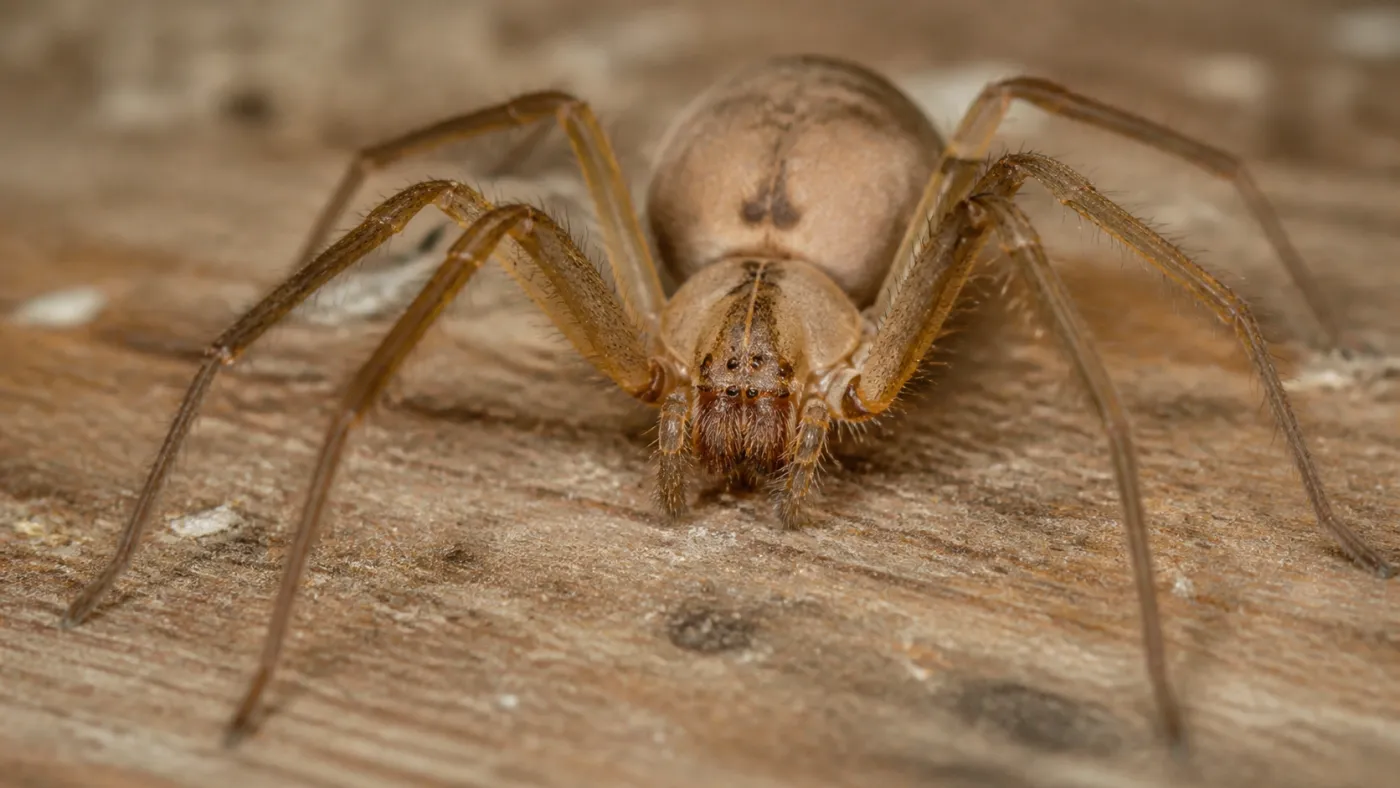
The brown recluse is the one spider Springfield homeowners are right to take seriously, and southwest Missouri sits in the heart of its range. This page explains how to identify a recluse correctly, what a bite can and cannot do, why store-bought sprays fail, and how to get a free price on the call from a licensed Springfield-area pro.
On this page
Are brown recluse spiders common in Springfield?
Yes. The brown recluse is native to the central United States, and Springfield sits in the core of its range; there are few places in the country where the species is more at home than southwest Missouri. Established houses with basements, attics, crawl spaces and years of accumulated storage are its ideal habitat, and a single Missouri home can quietly support a population of dozens or even hundreds. The recluse lives up to its name, though. It hunts at night, avoids people, and can share a house with a family for years without anyone being bitten, which is why the sensible response here is a plan, not panic.
How to identify a brown recluse correctly
The brown recluse is identified reliably by its eyes, not by its color or its markings. A recluse has six eyes arranged in three pairs, one pair in front and one on each side, while almost every other spider you will meet in a Springfield home has eight. That eye pattern is the one tell that holds up; everything else people rely on is easy to get wrong.
- Six eyes in three pairs. This is the reliable feature. A magnifying glass or a zoomed phone photo of a trapped specimen shows it clearly.
- The violin marking. A dark fiddle shape on the back, pointing toward the abdomen. It is famous but unreliable, because it is faint on young spiders and several harmless species carry similar patterns.
- Plain, uniform legs. Recluse legs are an even tan to brown with no bands, no stripes and no thick spines. A spider with striped or spiny legs is not a brown recluse.
- Modest size. With legs extended, an adult covers roughly the area of a quarter to a half dollar. A palm-sized spider is something else, usually a harmless wolf spider.
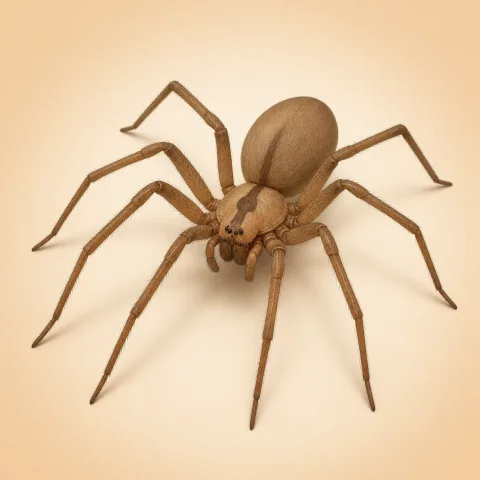
Most recluse sightings are misidentified. Wolf spiders, grass spiders and cellar spiders are caught and blamed far more often than actual recluses. If you can trap the spider under a glass or on a sticky board without touching it, do it; a confirmed specimen tells the inspector in seconds whether you have a recluse problem or a harmless lookalike. If the spider was big, hairy and fast, our guide to telling a brown recluse from a wolf spider walks through the eye count and leg check with a side-by-side table.
Where brown recluse spiders hide in a Missouri home
The brown recluse prefers dry, dark, undisturbed spaces, and an average Springfield house offers hundreds of them. The most common harborage areas are basements, closets, attics and garages, especially anywhere cardboard boxes have sat untouched for months. Inside living areas, recluses tuck in behind baseboards, under furniture, inside wall and ceiling voids, and in stored clothing, bedding, shoes and gloves left on the floor. That last habit matters, because most bites happen when a spider hiding in fabric gets pressed against skin, when someone puts on a shoe, pulls on a stored jacket or rolls over in bed. The spider is not aggressive; it bites only when trapped. For a room-by-room checklist of every spot to inspect, see our guide on where brown recluse spiders hide in the house, and browse the rest of our Springfield pest control guides for bites, look-alikes and removal.
The brown recluse bite: what it can and cannot do
Most brown recluse bites are minor and heal on their own. The typical bite causes mild redness and irritation that resolves within days to a few weeks, and many bites are never even noticed. In a minority of cases the venom causes a necrotic lesion, a sore where tissue breaks down and heals slowly, sometimes over weeks or months. Serious reactions affecting the whole body are rare, and reactions vary widely from person to person, which is exactly why a suspected bite belongs in front of a doctor rather than a web page. Nothing here is a diagnosis; it is general information so you can act calmly and quickly.
First aid for a suspected recluse bite. Wash the area with soap and water, apply a cool compress, and keep the limb elevated. Do not apply heat, because warmth can make tissue damage from recluse venom worse. See a doctor promptly if the wound spreads or blisters, if redness expands around it, or if you develop fever, chills or body aches. If you safely trapped the spider, bring it along; identification changes how the bite is treated.
Why DIY sprays fail and what professional treatment involves
Store-bought sprays fail against the brown recluse for reasons built into the spider itself. A recluse spends its life deep in voids, boxes and cracks that a surface spray never reaches, it walks on the tips of its legs so little of its body touches a dried residue, and unlike insects it does not groom pesticide off its legs and ingest it. Fogging a room mostly kills the spiders you could already see and can scatter the rest deeper into the structure.
Professional brown recluse control treats the problem as a process, and that is what you are paying for. A licensed Springfield-area provider typically works through these steps:
- Inspection of the basement, attic, garage and storage areas to find harborage and entry points.
- Sticky monitors placed along baseboards and in corners, both to knock down spiders and to measure how large the population actually is between visits.
- Targeted treatment of harborage, cracks, voids and the routes spiders travel, rather than a broadcast spray of open surfaces.
- Dust applications in wall voids and attics, where dusts persist in the undisturbed spaces recluses actually live and where liquids cannot go.
- Exclusion and clutter reduction, sealing gaps and thinning stored cardboard so the house simply offers fewer places to hide.
Expect a program, often several visits over a season, with the monitors telling you honestly whether the numbers are falling. Any provider promising to erase an established recluse population in one spray is overselling.
What brown recluse treatment costs in Springfield
Brown recluse control is priced after an inspection, because the cost depends on the size of the home, how much storage and clutter must be worked around, and how established the population is. As a general Springfield-area guide, an initial recluse service commonly runs from about $150 to $400, with ongoing suppression visits after that.
| Service | Typical Springfield range | Notes |
|---|---|---|
| Initial recluse service | $150 to $400 | Inspection, monitors, targeted treatment |
| Recurring / quarterly visits | $40 to $70 / visit | Ongoing suppression and monitoring |
| Heavy infestation program | $400 and up | Attic dusting, multiple visits |
These are typical market ranges, not a quote. Your price is set by the local provider after an inspection.
How to prevent brown recluse problems
Prevention against the brown recluse is mostly about denying it hiding places and keeping fabric off the floor. If you already have spiders and want the do-it-yourself plan in the right order, glue boards first and sprays last, read our guide on how to get rid of brown recluse spiders in a Missouri home. The habits that make the biggest difference in a Missouri home:
- Reduce clutter, and swap cardboard boxes for sealed plastic bins in basements, attics and closets.
- Move beds a few inches off the wall and remove bed skirts that touch the floor, so the bed is not connected to spider highways.
- Shake out shoes, gloves and any clothing or towels that sat out overnight before putting them on.
- Seal gaps around baseboards, pipes, doors and utility penetrations.
- Keep sticky traps along baseboards and in corners as permanent monitors; they tell you whether spiders are active long before you see one.
How to get a Springfield brown recluse quote
Call the number on this page, describe what you are seeing and where in the Ozarks you are, and you get a price and a scheduling window on the call. Ozarks Pest Pros is a free referral service; we connect you with a licensed local provider covering your ZIP code, and you are free to book with them or not, with no obligation either way. Same-day and 24/7 emergency services are subject to provider participation, location, technician availability, and demand. Availability is not guaranteed and may vary by market and appointment capacity. If you have confirmed a recluse, or keep finding tan spiders on sticky traps, it is worth the call now, because established populations only grow through the warm Missouri months.
Springfield brown recluse FAQ
Are brown recluse spiders common in Springfield, MO?
Brown recluse spiders are common throughout Springfield and southwest Missouri, which sits in the core of the species' natural range. Established homes with basements, attics and long-term storage are the most likely to host them, and a single home can hold a large population without the residents ever noticing.
How do I know if a spider is a brown recluse?
The brown recluse has six eyes arranged in three pairs, a uniform tan to brown body, and legs with no bands, stripes or spines. The famous violin marking is unreliable because many harmless spiders show similar patterns. With legs extended it is about the size of a quarter. Most suspected recluse sightings turn out to be other species.
Is a brown recluse bite dangerous?
Most brown recluse bites cause only mild, localized symptoms and heal on their own within a few weeks. A minority develop a slow-healing necrotic sore, and serious whole-body reactions are rare. Because reactions vary from person to person, see a doctor for any suspected bite, especially if the wound spreads, blisters or comes with fever.
Why do DIY sprays not work on brown recluse?
Store-bought sprays rarely reach brown recluse spiders because the species hides deep in wall voids, boxes and cracks, walks on tiptoe over dried residues, and does not groom the way insects do. Professional programs work instead through sticky monitors, targeted dust in voids, harborage removal and repeat visits that track the population down over time.
How much does brown recluse treatment cost in Springfield?
An initial brown recluse service in the Springfield area commonly runs from about $150 to $400, with ongoing quarterly suppression around $40 to $70 per visit. Heavy infestations that need attic dusting and several visits cost more. These are typical market ranges, not a quote; the local provider sets your price after an inspection.
How do I keep brown recluse spiders out of my bed and clothes?
Move beds a few inches off the wall, remove bed skirts that touch the floor, and shake out shoes, gloves and clothing that sat out overnight. Store seldom-used items in sealed plastic bins instead of cardboard, and keep sticky traps along baseboards so you can see whether spiders are still active.