Brown recluse vs wolf spider: telling them apart in a Springfield home
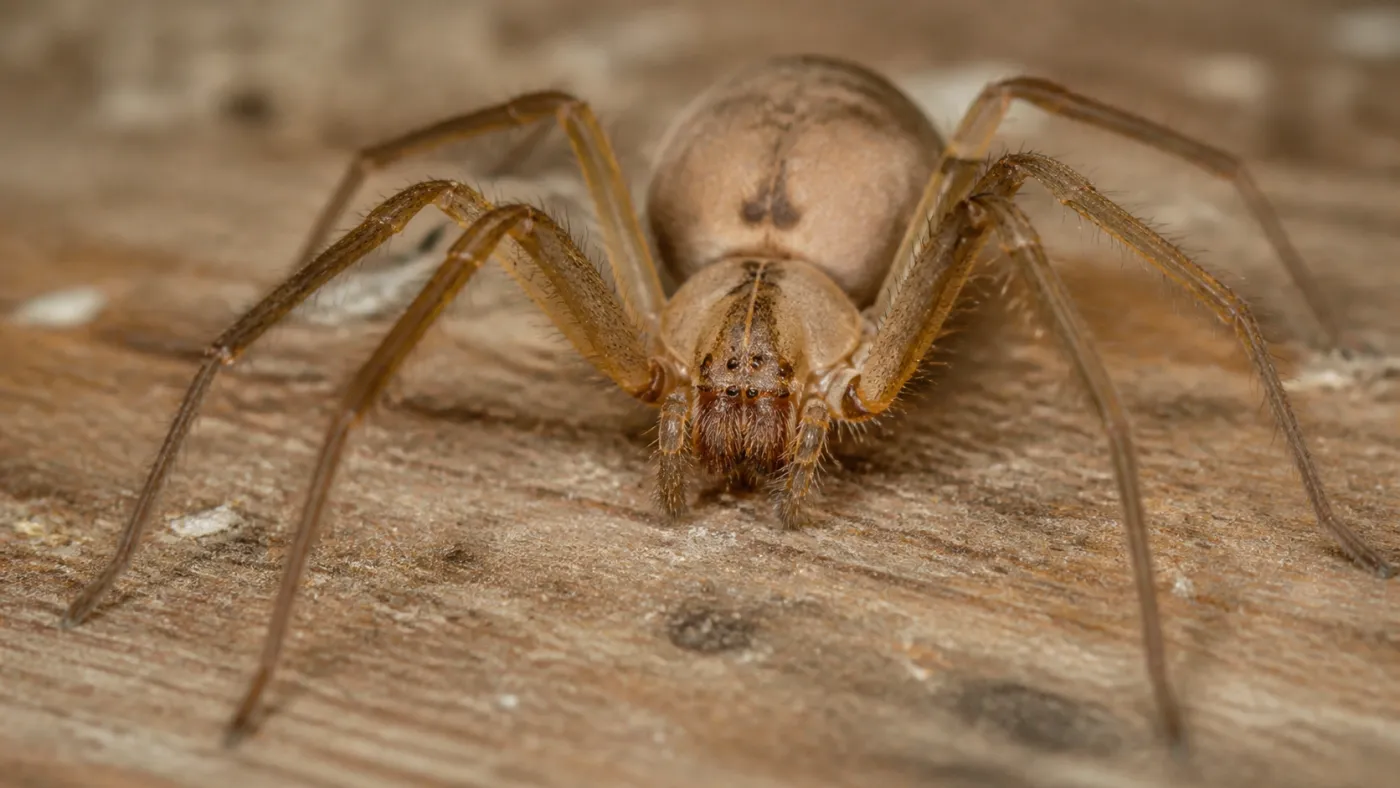
Nine times out of ten, the big hairy spider that sprinted across your Springfield kitchen floor was a wolf spider, and the small tan one sitting dead still in the bathtub was the one to worry about. That is the whole guide in one sentence. The rest of this page shows you how to be sure, using the three checks that actually hold up, why the mix-up costs more here than almost anywhere in the country, and where a do-it-yourself check ends and a licensed pro begins.
On this page
The 10-second answer: eyes, legs, size
A brown recluse has six eyes, plain unstriped legs and a body that covers about a quarter with the legs spread, while a wolf spider has eight eyes, hairy striped legs and can be twice that size or more. Those three checks settle nearly every argument in a Missouri kitchen. The famous violin marking is the one everybody reaches for first, and it is the least reliable of the bunch: young recluses wear it faintly, and a few harmless spiders carry a smudge that passes for one in a blurry photo. The Missouri Department of Conservation field guide puts the brown recluse at about a quarter inch of body, roughly an inch across with legs, and lists wolf spider bodies from a quarter inch to a full inch before you count the legs, with dark stripes on a gray, brown or tan background. So: small, smooth and plain is the recluse. Big, hairy and striped is the wolf.
Brown recluse vs wolf spider, side by side
The table below puts the brown recluse and the wolf spider next to each other on the features you can actually check from a phone photo or through a glass jar.
| Feature | Brown recluse | Wolf spider |
|---|---|---|
| Eyes | Six, in three pairs | Eight: two big headlights above a row of four small ones |
| Legs | Long, slim, one even tan-brown, no stripes, no heavy spines | Stout, visibly hairy, banded or striped |
| Size | Body about 1/4 inch, roughly 1 inch across with legs | Body 1/4 inch to 1 inch, big ones cover a palm with legs |
| How it moves | Slow, hides, freezes; found sitting still in tubs and sinks | Fast, runs across open floor, holds its ground |
| Web | Small, untidy web in a hidden retreat near the egg sac | No hunting web at all |
| Egg sac | Tucked behind boxes, baseboards, stored clothes | Carried on the mother's spinnerets; spiderlings ride on her back |
| Bite | Can cause a slow-healing sore, see a doctor | Harmless per Missouri Department of Conservation; stings, wash and watch |
Why the mix-up matters more in the Ozarks than almost anywhere
Mistaking a brown recluse for a harmless wolf spider is the expensive error, because southwest Missouri is the heart of recluse country and the spider you shrugged off does not leave. University of Missouri Extension cites one study that found the brown recluse in about 70 percent of the Missouri homes sampled. Seventy. Now picture what waiting looks like in your house. It is October. The spider you decided was just a wolf spider back in July has spent the summer behind the boxes on your closet floor, and she has not been alone back there: every small, untidy web in that corner is tied to an egg sac. You reach for the coat you have not worn since March, push your arm down the sleeve, and something soft gets pressed flat against the inside of your elbow. That is the counterpressure bite MU Extension describes, the only way a recluse ever bites anyone. Within hours, by the Missouri Department of Conservation's account, there is swelling, redness and tenderness; in the unlucky minority the spot breaks down into an ulcer that takes months to close and can leave a scar. And the closet still holds everyone the spider left behind.
That is the typical bad outcome, not a horror story. Most recluse bites stay mild and heal on their own. The point is simpler: the spider you misnamed keeps breeding whether or not you were right.
What the wolf spider is doing in your house, and why you can relax
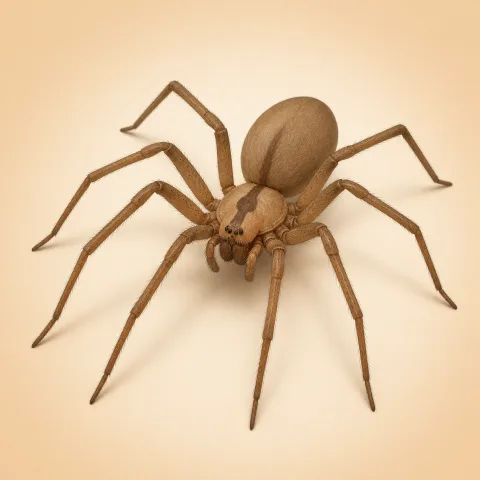
A wolf spider in a Springfield home is almost always a wanderer that came in from the yard, and the Missouri Department of Conservation calls the bites of North American wolf spiders harmless. Missouri has more than 40 wolf spider species by MDC's count, and the big ones show up indoors in fall, when the leaf litter cools and the garage door sits open an inch too long. They spin no web to catch food; they run prey down, which is why yours was moving like it had somewhere to be. The mother carries her egg sac clipped to her spinnerets, and once the eggs hatch the spiderlings ride on her abdomen for a couple of weeks. Stomp a female in September and you may watch a crowd of tiny spiders scatter across the floor. Nobody enjoys that. Cup her under a glass and walk her outside, or let a glue board do the work.
How to check safely at home, step by step
Identifying a brown recluse safely at home takes a clear jar, a phone camera and about two minutes, and it never involves touching the spider. Here is the routine, in order:
- Trap it, do not swat it. Drop a clear glass over the spider and slide a stiff card underneath. A squashed spider loses the two features you need most, the eyes and the legs. Flat glue boards along the baseboards in the garage, basement and closets do the same job while you sleep.
- Zoom in on the eyes. Photograph the head through the glass and pinch-zoom. Two big headlights over a row of four small eyes means wolf spider. Six eyes in three neat pairs, no big pair at all, means brown recluse.
- Look at the legs. Visible hair, bands or stripes: wolf spider. Slim, smooth legs in one even tan: recluse.
- Do the coin test. Set a quarter next to the trapped spider. A recluse with its legs spread covers roughly that coin. A spider that makes the quarter look small is usually a wolf spider.
- Note where you found it. Sitting still at the bottom of a tub or sink points to a recluse, since MDC notes the species cannot climb smooth surfaces. Charging across the living-room floor at ten at night points to a wolf spider.
- Run a one-week census. Leave the glue boards down for seven days and count. Our guide on how to get rid of brown recluse spiders in a Missouri home covers what to do with that number, from decluttering to what actually kills them.

When DIY is not enough: five signs this is a recluse problem, not a recluse
One confirmed brown recluse on a glue board is a spider; the signs below mean the house has a population, and that is where store-bought fixes stop paying for themselves. Any two of these and it is time to bring in a licensed provider:
- Six-eyed spiders on more than one glue board, or in more than one room. That is not a wanderer from the yard. That is a colony with travel routes.
- Recluses in living space, not just the garage. Bedrooms, the kids' closets, the bathtub every other morning. The garage is recluse country anyway; the bedroom is a warning.
- Small, untidy webs or papery egg sacs behind stored boxes. Each sac is the next generation, breeding on site rather than passing through.
- Somebody in the house has already been bitten. Follow our guide on what to do after a brown recluse bite for the medical side, and treat the house as the second half of the problem.
- You have decluttered and sealed, and the boards still refill. What remains lives in wall voids, attic insulation and under sill plates, which is dust-in-the-void work with a real learning curve.
Two or more of those sound like your house? The sensible next step is a phone call, not another fogger. Call (855) 629-1061 and Ozarks Pest Pros connects you with a licensed local provider who handles brown recluse control in Springfield and the surrounding Ozarks. Bring the jar. The pro identifies the spider on the spot, inspects the basement, attic and closets, and prices the job on the call with no obligation. As a typical market range, not a quote, an initial recluse service in the Springfield area often runs from roughly $150 to $400 with recurring suppression visits after that; the provider sets your price after seeing the home. Same-day and 24/7 service hinges on provider participation around Springfield, technician availability and the day's demand. It is not guaranteed; what the schedule can take varies by market and by how many appointments are already booked.
And if the jar turns out to hold a wolf spider, you have lost two minutes and gained a good story. Most spiders that scare Springfield homeowners are exactly that, and the ones that are not are entirely manageable once somebody who does this every week gets a look at the house. The full list of Springfield pest control services and typical costs is there if the inspection turns up something other than spiders.
Brown recluse vs wolf spider FAQ
Is a wolf spider dangerous to people?
No. The Missouri Department of Conservation describes the bites of North American wolf spiders as harmless, and a wolf spider only bites when it is grabbed or pinned. A bite stings and swells like a bee sting, so wash it with soap and water and keep an eye on it. The real risk with a wolf spider is the mix-up in the other direction: deciding a brown recluse is just a wolf spider and leaving it alone.
Does the violin marking prove a spider is a brown recluse?
Not on its own. The violin is faint on young brown recluses, and several harmless Missouri spiders carry a dark smudge that passes for one in a phone photo. The check that holds up is the eyes: a brown recluse has six eyes in three pairs, while a wolf spider and nearly every other spider in a Springfield home has eight. Pair the eye count with plain, unstriped legs and a body about the size of a quarter, and you have a reliable identification.
Why do I keep finding brown recluses in the bathtub?
Because a brown recluse cannot climb smooth surfaces. The Missouri Department of Conservation notes that recluses wander into tubs and sinks at night and get stuck there, which is why the spider you find in the morning is sitting still at the bottom of the tub. It did not come up the drain. It came down the wall, and it means the house has a population somewhere upstream of that bathroom.
Can a pest control company tell me which spider I have?
Yes, and it is the fastest route to a straight answer. Trap the spider under a glass or on a glue board without touching it and keep it for the inspection. Ozarks Pest Pros is a free referral service that connects you with a licensed local provider; the provider identifies the specimen, checks the basement, attic and closets for more, and gives you a price on the call with no obligation.