Termite swarm season in Missouri: what it means
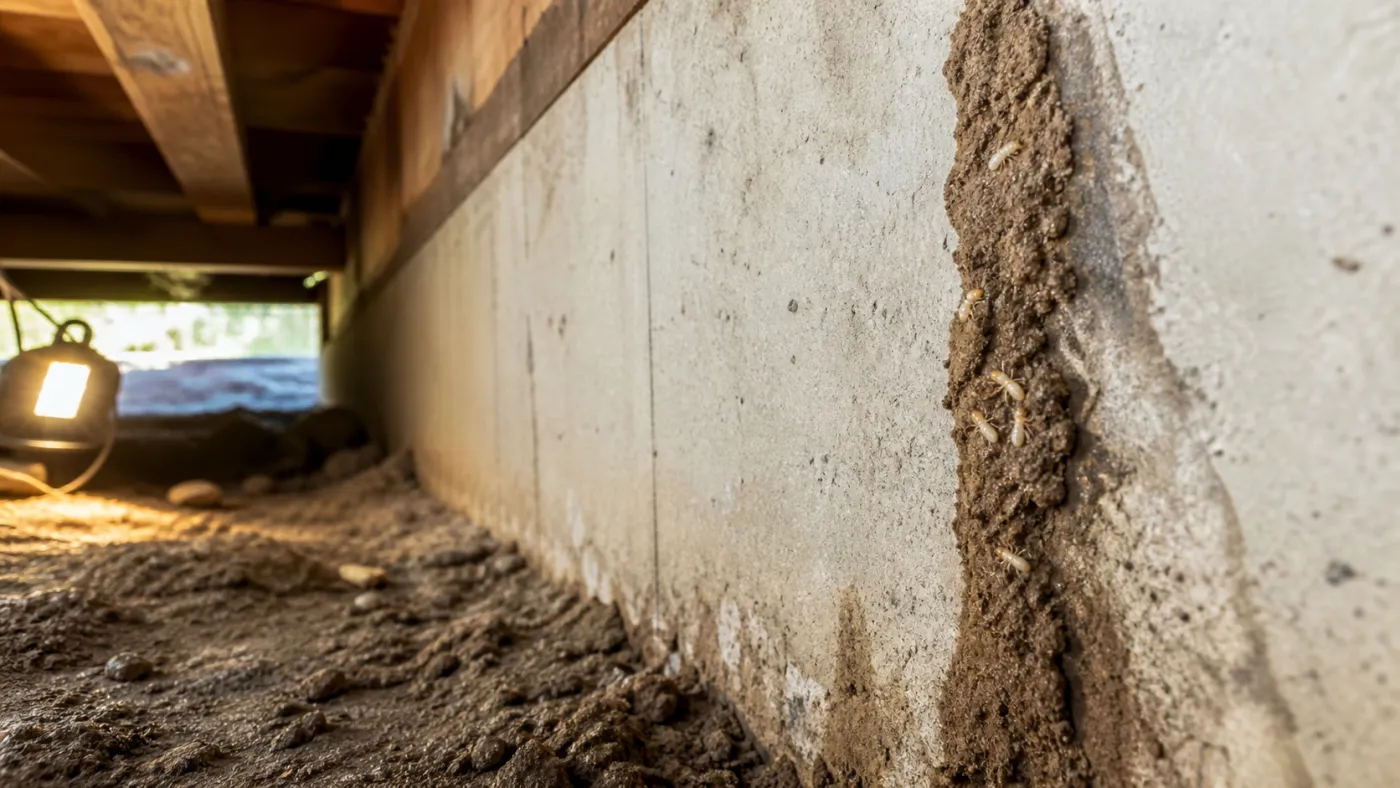
Termites swarm in Missouri in spring, usually on a warm day right after rain, and a swarm inside the house almost always means a colony is already established in or under it. The swarm itself is harmless. What it tells you is not. Below: the timing, how to tell a swarmer from a flying ant, what to do in the first hour, and the point where this stops being a homeowner job.
On this page
When do termites swarm in Missouri?
Missouri termite swarms happen in spring, and they cluster on warm days after rain. University of Kentucky Entomology names spring as the primary swarming season for subterranean termites and points to warm temperatures plus rainfall as the trigger, which makes a muggy April afternoon in Springfield after an overnight storm peak swarm weather. The flight is short. Winged termites leave the colony, drift toward light, drop, shed their wings and pair off, and most of it is over before you get home from work. The Missouri Department of Conservation field guide describes the same annual cycle: colonies release winged alates, and the survivors shed their wings and start new colonies.
Hold onto that. Swarming is reproduction, not an attack, and the swarm itself does no damage. The colony that sent them out is the point, and that colony is not new.
What a termite swarm actually means for your house
A swarm indoors means the colony is already in the structure, and University of Kentucky Entomology puts it plainly: finding winged termites indoors almost always indicates an infestation warranting treatment. Swarmers coming off a stump or woodpile in the yard are a softer signal. A mature colony is close, but not necessarily in your walls.
Picture the indoor version honestly, because most people talk themselves out of it. Warm Tuesday night in the Ozarks, you are asleep by eleven. Four feet from your headboard, behind the drywall, workers from that colony are grinding along the soft spring growth of a stud, wet mud packed in behind them, and they do not stop for weather, weekends or holidays. University of Kentucky Entomology notes that subterranean colonies contain many thousands of foraging individuals and that feeding and damage can progress undetected. Undetected is the whole problem. You will not hear a thing. You find out when a baseboard gives under the vacuum, when a patch of bathroom floor goes spongy, or, the expensive way, at a closing table, since a wood-destroying insect report is part of VA lending requirements in Missouri.
And the tell was there in April. A pile of little clear wings on the windowsill that you swept up and called flying ants.
Termite swarmer or flying ant?
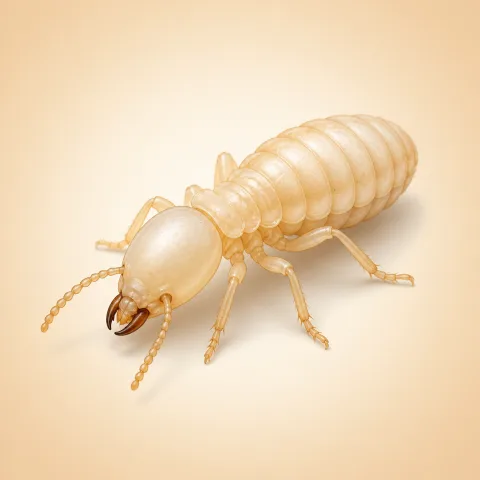
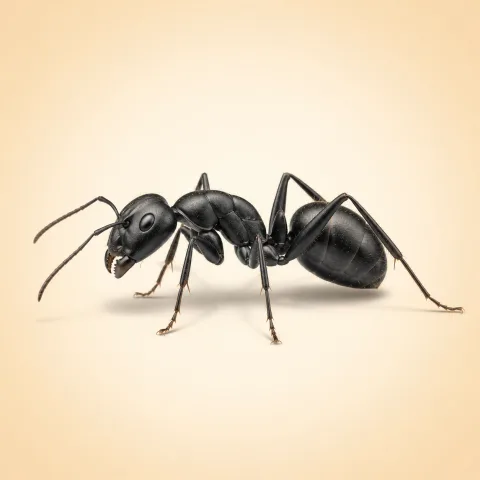
You can separate a termite swarmer from a flying ant with your naked eye in about ten seconds. University of Maryland Extension lays out the three checks that matter: antennae, waist and wings. Termites are the boring-looking ones. Ants have a figure.
| Check | Termite swarmer | Flying ant |
|---|---|---|
| Antennae | Straight, beaded | Bent at an elbow |
| Waist | Thick, no pinch | Clearly pinched |
| Wings | Four, all the same length | Front pair longer than the back |
| Size | Under half an inch | Varies by species |
| What they leave | Piles of shed wings at windows | Usually no wing piles |
The size figure comes from the Missouri Department of Conservation field guide, which puts adult termites at less than half an inch with wings of equal length. Squinting at a dead insect on a windowsill? Look at the waist first. It is the fastest of the three.
What to do in the first hour after a swarm
The first hour after a termite swarm is about evidence, not killing insects. The swarmers are already dying. University of Kentucky Entomology notes that swarmers are incapable of damaging wood, live only about a day, and can simply be swept or vacuumed up. So do this instead:
- Save a dozen in a jar. A real specimen settles the termite-or-ant question in seconds when an inspector arrives.
- Note and photograph where they came out before you clean: a crack in the slab, a wall-to-floor joint, a window frame, a bath trap. That exit point shows where the colony reaches your house, and it is the most useful thing you can hand a technician.
- Skip the spray. Aerosol kills swarmers that were dying anyway, does nothing to the colony, and scatters your evidence.
- Walk the foundation. University of Kentucky Entomology describes subterranean termite mud tubes as earthen tubes about the diameter of a pencil running over foundation surfaces. Check block, brick, piers and crawl-space joists.
- Tap the trim. Baseboards, door frames, sill plate, basement jambs. Wood that sounds papery instead of solid is worth flagging.
What you can do yourself before next spring
Homeowner prevention in the Ozarks is mostly a moisture and wood-contact project, and it is genuinely worth doing. Subterranean termites need damp soil next to wood. Plenty of Springfield-area houses hand it to them for free.
- Move water away from the foundation. Extend downspouts, clean the gutters, regrade the spot by the porch that puddles for two days after every storm.
- Fix the slow leaks: a dripping hose bib, an AC line dumping at the wall, a weeping crawl-space pipe.
- Break wood-to-soil contact. Deck posts, porch steps, buried form boards left over from the build.
- Pull the mulch back below the siding line and keep it thin. A deep mulch bed against a foundation is a termite highway with landscaping.
- Get firewood off the ground and away from the house. Stacked against the garage wall is the classic Ozarks mistake.
- Clear the crawl space: vents open, scrap lumber and cardboard out, vapor barrier flat.
- Walk the foundation every March with a flashlight. Ten minutes before swarm season beats finding out in May.
When DIY is not enough
Do-it-yourself stops working the moment the colony is inside the structure, and University of Kentucky Entomology is blunt about it: consumer products will seldom eradicate an existing termite problem, because treatment takes building knowledge, access to hidden entry points, masonry drills and large-capacity equipment. Signs your case is past the hardware store:
- Swarmers emerged indoors. Not on the patio. Inside, at a window, from a crack, from a wall joint.
- Mud tubes on the foundation, piers or joists. Even short, even broken, even if you knocked one down and it came back.
- Wood that sounds hollow or crumbles at the sill plate, a door frame or under a bathroom floor.
- Tubes or damage in a crawl space you cannot fully reach. Termite work that misses a stretch of the perimeter is money spent for nothing.
- You are selling, refinancing or under contract. That report needs a licensed applicator's name on it, not yours.
If any of those describe your house, the sensible next step is a free call to (855) 629-1061. We connect you with a licensed local provider who covers your ZIP code, they inspect, and you get a real price on the call with no obligation to book. Same-day and 24/7 emergency services are subject to provider participation, location, technician availability, and demand. Availability is not guaranteed and may vary by market and appointment capacity. For typical figures first, see our Springfield termite control page and the Springfield pest control cost guide.
After the swarm: what happens next
A termite swarm is an early warning, and early is good news. You are not standing in a house that is about to fall down. Subterranean termites work slowly and steadily, so you have weeks to make a smart decision, not years to ignore it. A standard treatment, either a continuous liquid barrier in the soil or a monitored bait program, handles the great majority of Missouri cases, and both are listed with prices on our Springfield services and pricing page.
One last thing, to keep these insects in proportion. The Missouri Department of Conservation points out that most North American termite species are decomposers that turn dead trees into nutrient-rich soil. They are good at their job. Yours is just making sure the wood they find is out in the woods, and not the stud behind your headboard.
Missouri termite swarm FAQ
When do termites swarm in Missouri?
Termites swarm in Missouri in spring, and the flights cluster on warm days right after rain. University of Kentucky Entomology names spring as the primary swarming season for subterranean termites and warm temperatures plus rainfall as the trigger. A single flight is usually over in well under an hour, which is why so many Springfield homeowners find the wings and never see the insects.
Does a termite swarm inside the house mean I have termites?
Yes, in almost every case. University of Kentucky Entomology states that finding winged termites indoors almost always indicates an infestation warranting treatment. Swarmers coming out of a stump or a woodpile in the yard are a different matter and do not prove the house itself is infested, though they do mean a mature colony is close.
Do termite swarmers bite or damage wood?
No. University of Kentucky Entomology notes that swarmers are incapable of damaging wood and only live for about a day, and that sweeping or vacuuming them up is enough. The damage comes from the worker termites that stay hidden in the soil and the wood, which is the part of the colony you never see.
What does termite treatment cost in Springfield, MO?
Termite work in the Springfield area commonly runs roughly $800 to $2,500 for a liquid barrier treatment, while bait-station programs are often billed at $400 to $1,500 per year including monitoring. These are typical market ranges, not a quote. The real number is set by the local provider after an inspection, because foundation type and linear footage drive the price.